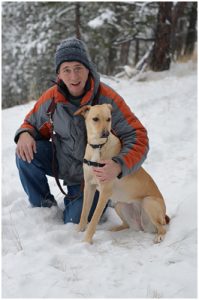
My name is Michael Wieser. I am a nature and photography enthusiast living in southern Alberta, Canada. Through the medium of photography, I want to express the essence that connects all living things. There are many awe inspiring areas to explore in this part of the world and I have focused on three regions that are of particular significance to me; the North, the Rocky Mountains, and the West Coast. These are enormous areas and obviously include many different ecosystems and only a very tiny portion is reflected in the photographs on this website. Fortunately, this means that there is much more to explore!
Ethics and the Photographer
In pursuit of the ultimate photograph, I believe it is critical to respect the wildlife and the environment. There are some terrific resources on the ethical conduct of a nature photographer. Brad Hill has put together a thoughtful discussion entitled Wildlife FIRST! that provides essential guidelines for the nature photographer. The Nature Photographers Network promote values in alignment with several organizations, including the American Birding Association and the North American Nature Photography Association. I think ethical conduct is based on respect for all living things and natural spaces on the basis of their intrinsic value. I avoid any manipulation of the scene. The animals in the photographs are wild and were not baited nor coerced into exhibiting any behaviours.
The Workflow
Digital photography has enabled me to follow the creative process from the capture of the image through to the print or final image file. With black and white film, I was able to work in the chemical darkroom to take the image from the negative through to a print. With colour film, I was often frustrated with the resultant image that never really achieved the scene that I had in mind. I did not have the resources or knowledge to process a colour print. That has changed in a digital workflow! I process RAW files from the camera using Phase One’s Capture One software. The first stage of “developing” consists of adjustments to exposure, saturation and colour. Capture One enables one to create variants of an image such that each file optimizes a particular portion of the scene. I export these variants to Photoshop where the variants are combined using layer masks to produce the final image. Finally, the images are sharpened and resized for web or print.
Why Optic Nervous?
The name suggests a state of mind; the anticipation created by being an active observer. The opportunity to create images connects me to my surroundings in a direct and intimate manner. I can exist in a pure state of awe and wonder as I watch for the optimum moment to record.